What your invoice must show
As an auto-entrepreneur, each invoice shows:
- Your name, address and the mention of the status (auto-entrepreneur).
- Your ICE and your identification number in the national auto-entrepreneur register; your IF.
- The client’s name and address, and its ICE if it is a business.
- A continuous invoice number, the date, the description, quantity and price of each line.
- The total without VAT: the status does not charge VAT, so do not add any.
Using the tool step by step
The numbered marks on the screenshots follow the order in which you use the tool. The fields are filled with an example.
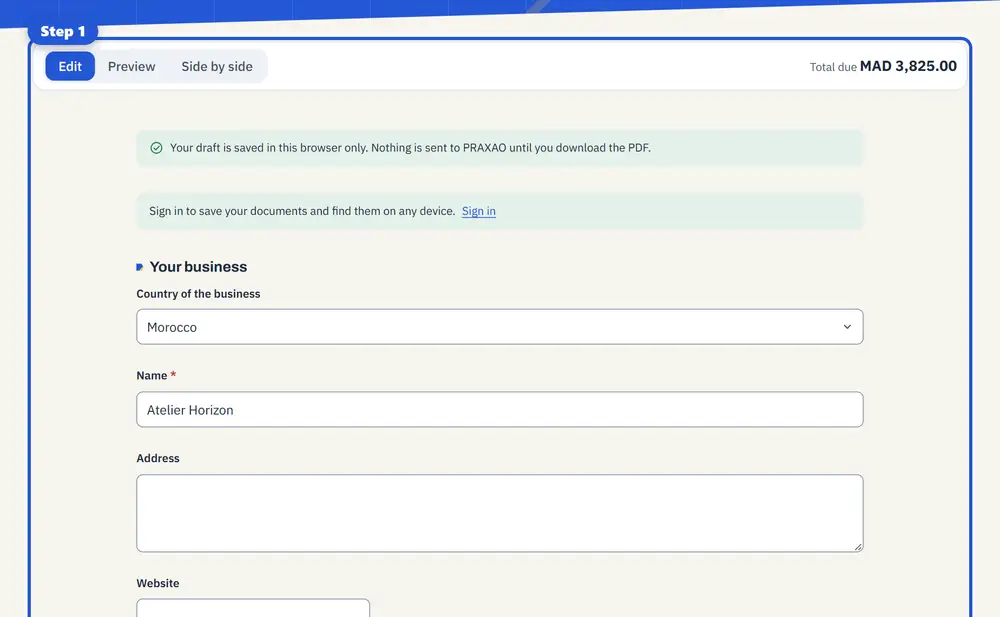
Step 1 Enter your values: dimensions, materials and options. 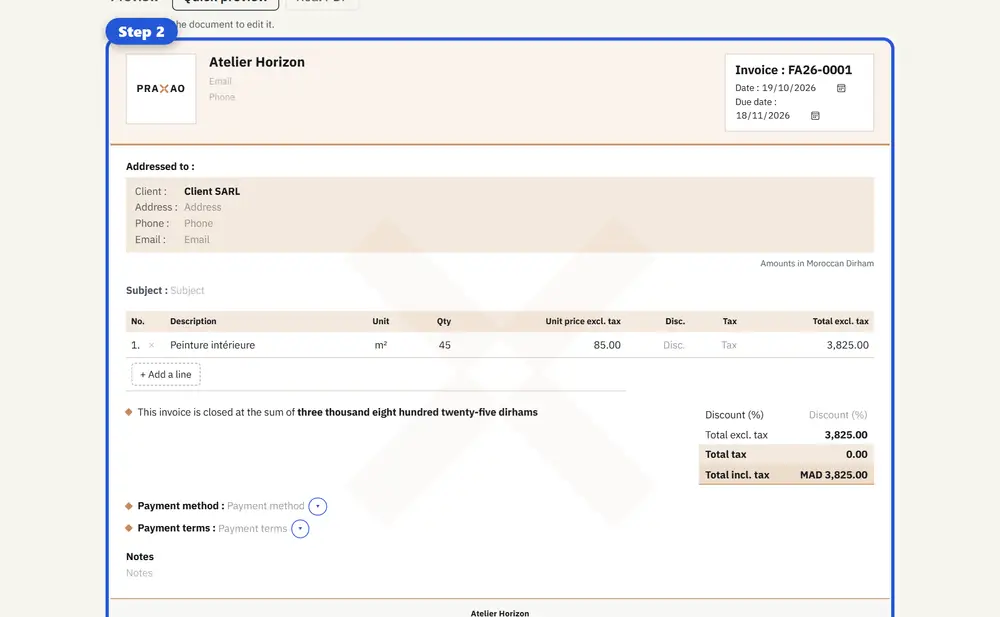
Step 2 Check the preview of the document as it will be sent. 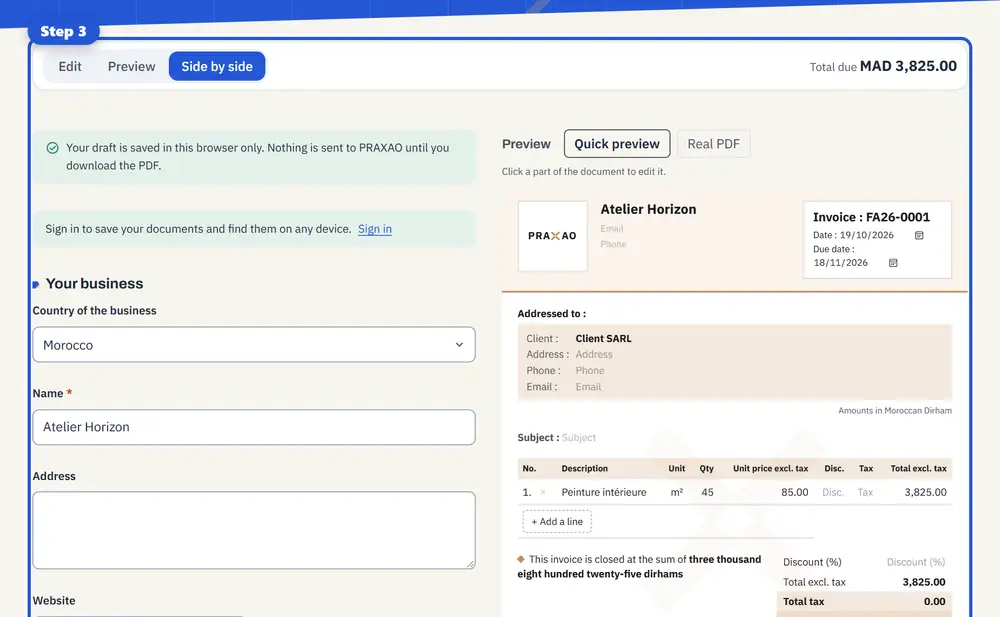
Step 3 Edit the fields and watch the document update side by side.
Tax and ceilings
The tax is a percentage of the turnover you collect, declared quarterly: 0.5 % for commercial, industrial and craft activities and 1 % for services. The status has annual turnover ceilings (500,000 DH for commercial, industrial and craft activities, 200,000 DH for services); above them, you must change status.
Since the 2023 finance law, when the same client pays you more than 80,000 DH in a year, the part above this amount is subject to a withholding tax deducted by the client. Spread your activity across several clients or consider a company if one client becomes most of your business.
Example and good habits
A painter auto-entrepreneur invoices 120 m² at 25 DH: total 3,000 DH, without VAT. At 1 % (services), the quarterly tax on this invoice is 30 DH once paid.
Keep a register of your receipts, number invoices continuously and keep a copy for 10 years. Amounts and rates change with finance laws: check your case with the auto-entrepreneur portal, the DGI or an accountant.
General information, checked at the date shown. It does not replace advice from a professional for your situation.